By Admin / 26 Aug 2026
How Kinematics, Liquid Dynamics, and Production Speeds Dictate the Right Motion Profile for Your Packaging Line
- Engineering
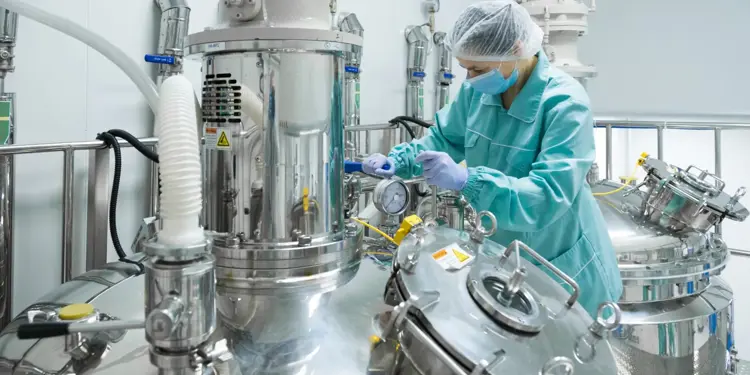
In today’s fiercely competitive manufacturing landscape, relying on manual production workflows is a direct threat to long-term business growth. Manual material handling, uncalibrated batch processing, and legacy tracking methods introduce human error, cause product waste, and create dangerous compliance vulnerabilities.
For factories operating within highly regulated sectors—such as the Pharmaceutical Industry, Food & Beverage packaging, Cosmetics, or Herbaceutical production—maintaining absolute processing precision is non-negotiable. A slight variation in processing temperature, ingredient weights, or ambient humidity can ruin an entire production batch, forcing massive financial losses and failing strict regulatory audits.
To scale up safely, modern manufacturers must systematically replace manual dependencies with industrial Process Automation & Compliance frameworks. Integrating custom automation panels with reliable quality management protocols ensures identical product quality across every single batch.
Building a highly automated facility does not necessarily mean purchasing entirely new processing systems from scratch. Many established factory operations in Nepal can unlock excellent efficiency upgrades by retrofitting their existing, manual manufacturing assets with modern control technology.
Key benefits of upgrading your legacy production infrastructure include:
Custom Control Panel Fabrication: By engineering and wiring custom automation panels directly into your plant's infrastructure, automation teams can centralize separate manual machine controls into a single, unified operations interface.
Programmable Logic Controllers (PLC) & SCADA Integration: Installing high-performance PLC programming and Supervisory Control and Data Acquisition (SCADA) integrations allows your management team to monitor active temperature curves, mechanical speeds, and pressure metrics in real time.
Automated Pneumatic or Mechanical Overrides: Retrofitting older machinery with modern sensor arrays and automated pneumatic overrides instantly cuts down material waste by automatically pausing the production line the second an ingredient flow deviation occurs.
As regulatory bodies like the Department of Drug Administration (DDA) and the Department of Food Technology and Quality Control (DFTQC) enforce increasingly stringent standards, passing operational audits requires built-in data integrity. Moving your factory toward global benchmarks like ISO, HACCP, OHSAS, and GMP (Good Manufacturing Practices) requires automated record-keeping.
Manual tracking sheets are highly prone to data manipulation or loss. Industrial automation networks solve this compliance gap by automatically logging critical environmental and processing data. Clean-in-Place (CIP) cycle data, precise batch sterilization run times, and raw ingredient weights are securely logged via system software. This provides your quality management crew with absolute proof of safety during official regulatory reviews.
[Manual Line Data] ➔ [Sensor Tracking] ➔ [PLC Control Adjustments] ➔ [Secure Data Logging] ➔ [Audit-Ready Reports]
Modern process automation also opens up valuable opportunities for active product development and research. By leveraging precise parameter control over test batches, manufacturing teams can confidently execute research and development for new product formulations, leading directly to extended shelf-life and improved market competitiveness.
Furthermore, advanced automated instrumentation allows factories to manage material yields more sustainably. Smart automation architectures can track and optimize byproduct utilization and industrial waste management workflows, allowing your facility to repurpose processing runoff efficiently, cut down on environmental taxes, and lower primary manufacturing costs.
Transitioning your manufacturing lines from manual monitoring to robust, automated control networks is the definitive step to securing enterprise-level scale. By integrating custom PLC programming with rigorous compliance record-keeping, you secure your operational capacity, protect consumer safety, and simplify international quality audits.
Whether you are looking to retrofit a legacy processing floor or program an intelligent SCADA system for a new facility, explore how our specialized teams execute Process Automation & Compliance. For custom software integration or automation panel pricing, head over to our Contact Us page to connect with an automation engineer.

By Admin / 26 Aug 2026

By Admin / 24 Aug 2026

By Admin / 21 Jul 2026